


Series Cast


Similar Series

Totally Frank was a comedy drama series with a real life band as its stars on Channel 4. It followed a band, Frank, who were struggling to make it in the music industry.
Totally Frank

Beat-Club was a German music program that ran from September 1965 to December 1972. It is notable for being the first German show to be based around popular music, and featured artists such as The Equals, Grateful Dead, Zager and Evans, Cream, Frank Zappa, The Rolling Stones, Gene Pitney, Ten Years After, Rory Gallagher, Led Zeppelin, Jimi Hendrix, Ike & Tina Turner, The Who, Black Sabbath, Harry Nilsson, David Bowie, The Bee Gees, The Beach Boys, Chicago, The Doors, Kraftwerk and Robin Gibb in its seven-year run. In 1972, it was replaced by Musikladen.
Beat-Club

The Artful Dodger was a short-lived black-and-white British sitcom starring Dave Morris and Gretchen Franklin. It ran for one series in 1959. It was written by Frank Roscoe and Dave Morris.
The Artful Dodger

The next generation of UFC stars are produced in an intense elimination tournament that separates the contenders from the pretenders.
The Ultimate Fighter

Sledge Hammer! is an American satirical police sitcom produced by New World Television that ran for two seasons on ABC from 1986 to 1988. The series was created by Alan Spencer and stars David Rasche as Inspector Sledge Hammer, a preposterous caricature of the standard "cop on the edge" character. Al Jean and Mike Reiss, best known for their work on The Simpsons, wrote for the show and worked as story editors.
Sledge Hammer!

Molly Dodd, a divorced woman in her mid-thirties living in New York, navigates the ups and downs of a rapidly changing career, the challenges of apartment life, and the complexities of love and its consequences.
The Days and Nights of Molly Dodd
Card Sharks is an American television game show created by Chester Feldman for Mark Goodson-Bill Todman Productions. Two contestants compete for control of a row of oversized playing cards by answering questions posed by the host and then guessing if the next card is higher or lower in value than the previous one. The concept has been made into a series four separate times since its debut in 1978, and also appeared as part of CBS's Gameshow Marathon. The primary announcer for the first three series was Gene Wood.
Card Sharks

Moon TV is a New Zealand television comedy show. It is produced by Leigh Hart. In 2006 the show received NZD$176,324 in funding from New Zealand On Air for six half-hour episodes, to screen on TV2. The show has run for five seasons, all available for purchase on DVD. The sixth season began on 25 August 2010.
Moon TV

Joanie Loves Chachi is an American television spin-off of the American sitcom Happy Days that was originally broadcast on ABC from March 23, 1982 to May 24, 1983. It stars Erin Moran and Scott Baio as the titular Joanie Cunningham and Chachi Arcola, respectively.
Joanie Loves Chachi

Recommended Series

Two families compete against each other in a contest to name the most popular responses to a survey question posed to 100 people.
Family Feud


The Carol Burnett Show is an American variety/sketch comedy television show starring Carol Burnett, Harvey Korman, Vicki Lawrence, Lyle Waggoner, and Tim Conway. It originally ran on CBS from September 11, 1967, to March 29, 1978, for 278 episodes and originated from CBS Television City's Studio 33. The series won 25 prime time Emmy Awards, was ranked No. 16 on TV Guide's 50 Greatest TV Shows of All Time in 2002 and in 2007 was listed as one of Time magazine's "100 Best TV Shows of All Time."
The Carol Burnett Show
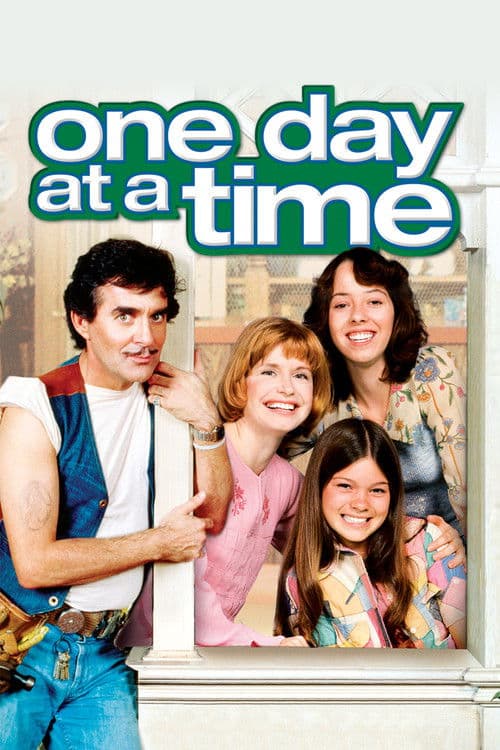
The misadventures of a divorced mother, two teenage daughters, and their new building superintendent in Indianapolis.
One Day at a Time

You Can't Do That on Television is a Canadian television program that first aired locally in 1979 before airing internationally in 1981. It featured pre-teen and teenaged actors in a sketch comedy format. Each episode had a theme. The show was notable for launching the careers of many performers, including Alanis Morissette, and writer Bill Prady, who would write and produce shows like The Big Bang Theory, Gilmore Girls and Dharma and Greg. The show was produced by and aired on Ottawa's CTV station CJOH-TV. After production ended in 1990, the show continued in reruns on Nickelodeon through 1994, when it was replaced with the similar All That. The show is synonymous with Nick, and was at that time extremely popular, with the highest ratings overall on the channel. The show is also well known for introducing the network's iconic slime. The program is the subject of the 2004 feature-length documentary, You Can't Do That on Film, directed by David Dillehunt.
You Can't Do That on Television

Nick Cannon and an A-list celebrity lead a team of improv comedians as they compete against each other.
Nick Cannon Presents: Wild 'N Out

A narrative series set in a limitless magical reality full of dynamic, hilarious characters and celebrity guests presenting sketches performed by a core cast of black women.
A Black Lady Sketch Show

A show for Fanboys by Fanboys. Set in uber-geek Kevin Smith's iconic comic shop Jay and Silent Bob's Secret Stash, the show explores every nook and cranny of Fanboy culture from A to Z. Endless circular debates about the technical accuracy of the USS Enterprise's warp-core schematics? Snarky comic aficionados with an encyclopedic knowledge of every Marvel back issue? You bet.
Comic Book Men

The Flintstone Comedy Show is a 90-minute Saturday morning animated series revival of The Flintstones produced by Hanna-Barbera and aired from November 22, 1980 to September 11, 1982 on NBC. Outside North America, the show was released under title of Flintstone Frolics. The show contained six segments: The Flintstone Family Adventures, Bedrock Cops, Pebbles, Dino and Bamm-Bamm, Captain Caveman, Dino and Cavemouse, and The Frankenstones.
The Flintstone Comedy Show

The Lucy Show is an American sitcom that aired on CBS from 1962–68. It was Lucille Ball's follow-up to I Love Lucy. A significant change in cast and premise for the 1965–66 season divides the program into two distinct eras; aside from Ball, only Gale Gordon, who joined the program for its second season, remained. For the first three seasons, Vivian Vance was the co-star. The earliest scripts were entitled The Lucille Ball Show, but when this title was declined, producers thought of calling the show This Is Lucy or The New Adventures of Lucy, before deciding on the title The Lucy Show. Ball won consecutive Emmy Awards as Outstanding Lead Actress in a Comedy Series for the series' final two seasons, 1966–67 and 1967–68.