

Alice
“Kiss my grits!”
Overview
Alice is an American sitcom television series that ran from August 31, 1976 to March 19, 1985 on CBS. The series is based on the 1974 film Alice Doesn't Live Here Anymore. The show stars Linda Lavin in the title role, a widow who moves with her young son to start her life over again, and finds a job working at a roadside diner on the outskirts of Phoenix, Arizona. Most of the episodes revolve around events at Mel's Diner.
Seasons (9)
Season 1
24 Episodes
1976
Season 2
24 Episodes
1977
Season 3
24 Episodes
1978
Season 4
24 Episodes
1979
Season 5
20 Episodes
1980
Season 6
24 Episodes
1981
Season 7
23 Episodes
1982
Season 8
23 Episodes
1983
Season 9
16 Episodes
1984
Series Cast


Similar Series

The family life, romantic life, and career of Martin Tupper, a divorced New York City book editor. The show distinctively interjected clips from older black and white television series to punctuate Tupper's feelings or thoughts.
Dream On

Nora Powers is head of personnel at Ashvale Advertising. However, when her retired husband George joins as chief commissionaire, embarrassment runs wild.
My Husband and I

Is It Legal? is a British television sitcom set in a solicitors office in Hounslow, west London, which ran from 1995 to 1998. It was produced by Hartswood Films and was shown on ITV for Series 1-2 and Channel 4 for Series 3. It was written by Simon Nye, who also wrote other ITV sitcoms such as Men Behaving Badly and Hardware.
Is It Legal?

Allen Braddock and Marcus Jackson are two attorneys with very different views on the law. After getting fired from his father's prestigious firm for employing questionable tactics, Allen is forced to team up with Marcus, a self-made man always willing to fight for the people of his neighborhood, even if it doesn't mean collecting a check. When the two partner up, they take on cases that challenge their moral, personal, and ethical boundaries, but always manage to find common ground.
Partners

Pavel, Victor and Vlad are grandfather, father and son who are forced to live together...
Two Fathers and Two Sons

Meet the most beloved sitcom horse of the '90s , 20 years later. He's a curmudgeon with a heart of...not quite gold...but something like gold. Copper?
BoJack Horseman

Paula Russell is the producer of a soap opera called All Is Forgiven who just married a donut executive with a teenage daughter.
All Is Forgiven

Eric and Donny are roommates working in an investment firm so they can do the things they love: Eric wants to be a writer, while Donny’s a budding photographer.
Too Something

Recommended Series
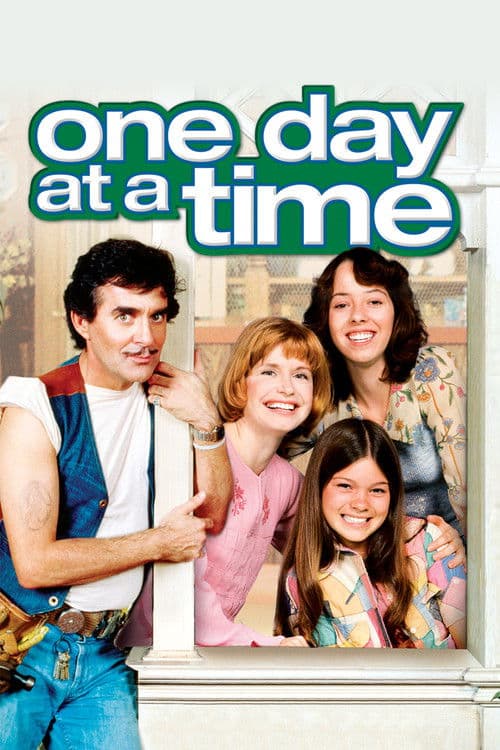
The misadventures of a divorced mother, two teenage daughters, and their new building superintendent in Indianapolis.
One Day at a Time

Single working mom Christine Campbell has just learned that her ex is dating a much younger woman with the same first name. To avoid any confusion, the new girlfriend is dubbed New Christine, which leaves her with the unfortunate nickname Old Christine.
The New Adventures of Old Christine

Welcome to Beacon Street Pizza, the perfect workplace and hangout for aimless wise-guy Berg, neurotic Pete and campus beauty Sharon. Pete and Berg are roommates and students at a local Boston university, while Sharon struggles with her work and relationships. Together, these three best friends try to navigate life and love in Boston!
Two Guys and a Girl

The Lucy Show is an American sitcom that aired on CBS from 1962–68. It was Lucille Ball's follow-up to I Love Lucy. A significant change in cast and premise for the 1965–66 season divides the program into two distinct eras; aside from Ball, only Gale Gordon, who joined the program for its second season, remained. For the first three seasons, Vivian Vance was the co-star. The earliest scripts were entitled The Lucille Ball Show, but when this title was declined, producers thought of calling the show This Is Lucy or The New Adventures of Lucy, before deciding on the title The Lucy Show. Ball won consecutive Emmy Awards as Outstanding Lead Actress in a Comedy Series for the series' final two seasons, 1966–67 and 1967–68.
The Lucy Show

The Hogan Family is an American television situation comedy that aired on NBC from March 1, 1986 to May 7, 1990, and on CBS from September 15, 1990 until July 20, 1991. It was produced by Miller-Boyett Productions, along with Tal Productions, Inc., and in association with Lorimar Productions, Lorimar-Telepictures and Lorimar Television. The show was originally titled Valerie and starred Valerie Harper as a mother trying to juggle her career with raising her three sons by her often-absent airline-pilot husband. Harper was written out of the series after the second season because of a dispute with the show's producers. Sandy Duncan joined the cast as the boys' aunt, who moved in and became their surrogate mom. During the show's third season, the series was known as Valerie's Family: The Hogans, then simply as The Hogan Family.
The Hogan Family

Gimme a Break! is an American sitcom which aired on NBC for six seasons, October 29, 1981, until May 12, 1987. The series stars Nell Carter as the housekeeper for a widowed police chief and his three daughters.
Gimme a Break!

Family man Jim Anderson copes with the everyday problems among his wife Margaret and their three children as they experience day-to-day changes.
Father Knows Best

After her dentist husband of 20 years leaves her for his dental hygienist, Reba Hart's seemingly perfect world is turned upside down.
Reba

A widower and aeronautical engineer named Steven Douglas raises three sons with the help of his father-in-law, and later the boys' great-uncle. An adopted son, a stepdaughter, wives, and another generation of sons join the loving family in later seasons.
My Three Sons

An inquisitive and often naïve boy, Theodore 'The Beaver' Cleaver, has adventures at home, in school, and around his suburban neighborhood. The show also starred Barbara Billingsley and Hugh Beaumont as Beaver's parents, June and Ward Cleaver, and Tony Dow as Beaver's brother Wally. The show has attained an iconic status in the US, with the Cleavers exemplifying the idealized suburban family of the mid-20th century.

